PTPTN Deferment: 400,000+ Borrowers Under RM2,500 Get a Pause
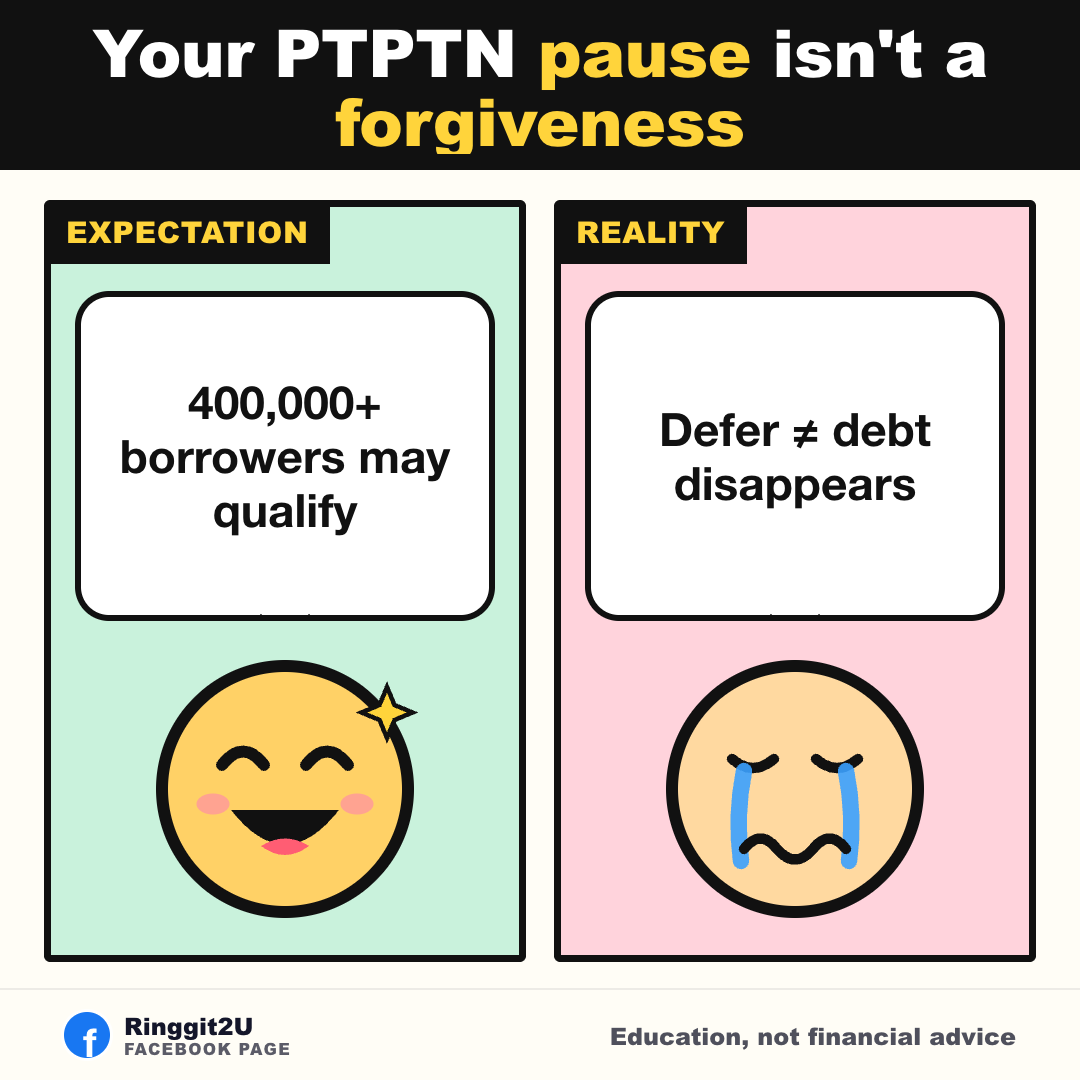
If your salary is below RM2,500, Budget 2027 may let you pause your PTPTN instalment — but the debt does not disappear.
The short version
- Budget 2027 proposes deferring PTPTN repayments for over 400,000 borrowers with salary under RM2,500 a month.
- Defer is not forgive: your outstanding balance stays on record and repayment resumes later.
- This is a proposal until the Finance Bill passes Parliament; implementation details are not yet published.
What Budget 2027 actually proposes for PTPTN
Prime Minister Anwar Ibrahim tabled Budget 2027 on 9 October 2026, with a total allocation of RM459.8 billion. One of the measures in that speech: over 400,000 PTPTN borrowers earning under RM2,500 a month are eligible to defer their repayment.
The word that matters here is defer. It means the instalment clock pauses. It does not mean the loan is written off, the balance is reduced, or the interest stops being your responsibility. The debt is still yours; you are simply not paying it right now.
This is a proposal inside the Budget speech. It becomes binding law only after the Finance Bill passes Parliament. Until that happens, your PTPTN schedule stays as it is. The Budget speech does not yet spell out the application process, the exact start date, or how long the deferral window lasts.
Key figures
| Measure | Figure |
|---|---|
| PTPTN deferral salary threshold | Under RM2,500/month |
| Borrowers affected | Over 400,000 |
| Take-home at RM2,500 gross (YA2026) | About RM2,207.85 |
| Proposed starting wage (graduates / semi-skilled) | RM2,500/month |
| Proposed national minimum wage (from June 2027) | RM2,000/month |
| Total Budget 2027 allocation | RM459.8 billion |
Key numbers from Budget 2027 PTPTN and wage measures
What RM2,500 gross actually lands in your account
At a gross salary of RM2,500 a month (YA2026 rates, single, under 60, automatic reliefs only), your deductions are: EPF 11% = RM275, SOCSO = RM12.25, EIS = RM4.90, PCB = RM0. Your take-home is about RM2,207.85. Your employer adds RM325 EPF on top, but that never touches your pocket.
For example, if your PTPTN instalment is RM200 a month and your take-home is about RM2,207.85, deferring it frees up roughly 9% of the money you actually have to cover rent, food, transport and phone bills.
Notice the PCB line: it is RM0. At this salary level, you owe no income tax, so your employer is not withholding a monthly tax instalment. The only statutory deductions are EPF, SOCSO and EIS. That is why the gap between gross and net is relatively small at this bracket.
The RM2,500 number appears twice in the same Budget
Budget 2027 also proposes RM2,500 as a starting wage for semi-skilled positions and graduates, as part of a wider reform of the wage framework. That is a different measure from the PTPTN deferral, but it uses the same salary line.
Here is where people get confused: that RM2,500 starting wage is not the national minimum wage. The minimum wage proposed in the same Budget is RM2,000, effective from June 2027. The starting wage is a targeted benchmark for specific roles; the minimum wage is the legal floor for almost all employees.
The practical link for PTPTN borrowers: if your salary is under RM2,500 today, you qualify for the deferral. If a future pay rise pushes you over that line, the deferral condition may no longer apply. How many months of pause you get before your salary crosses that threshold depends on your employer's structure, which the Budget does not detail.
Three things to keep in mind before you celebrate
First, defer is not forgive. Your outstanding balance does not shrink. For example, if you owe RM15,000 today, you still owe RM15,000 when the deferral ends. The only thing that changes is when you pay.
Second, it is still a proposal. The Budget speech is a plan. The Finance Bill has to pass, and the implementing rules (who applies, through which channel, what triggers the end of the pause) have not been published as of 11 October 2026.
Third, the threshold is your salary, not your take-home. The Budget speech refers to borrowers with salary under RM2,500. In Malaysian payroll language, that is the gross figure on your contract or payslip, before EPF and SOCSO come out. For example, if your gross is RM2,600 but your take-home is RM2,300, you are above the line.
Pros & cons
✅ Good for you
- Frees up cash flow for low-income borrowers who are stretching to cover basic living costs
- Uses the same RM2,500 benchmark as the proposed starting wage, keeping the two policies aligned
⚠️ Watch out
- The outstanding balance remains; you are not getting a reduction or forgiveness
- Still a proposal until the Finance Bill passes; no start date or application process is confirmed yet
What you can do
- Check your current PTPTN balance
Log in to the PTPTN borrower portal or call their customer service line. Note the outstanding principal and the remaining number of instalments. This is the number that stays on record during any deferral.
- Confirm your gross salary figure
Look at your latest payslip. The relevant number is the gross (before EPF, SOCSO, EIS, PCB). If your gross is under RM2,500, you fall inside the proposed threshold. If you are close to the line, keep your payslips handy.
- Track the Finance Bill passage
The Budget 2027 measures take effect only after the Finance Bill is passed in Parliament. Watch for the specific PTPTN section in the Bill and any accompanying PTPTN circular that spells out the application process and dates.
- Plan for when repayment resumes
The deferral is a pause, not an exit. Once your salary crosses the threshold or the deferral window closes, instalments restart. Think about how you will rebuild that monthly outflow without it feeling like a shock.
- Ask PTPTN about edge cases
If you earn just above RM2,500, or if your salary varies month to month, call PTPTN to ask how they assess eligibility. The Budget speech gives the principle; the implementing rules will define the details.
Questions people ask
Does PTPTN deferral mean my loan is forgiven?
No. Defer means you stop paying for a set period. Your outstanding balance does not shrink. Whether interest continues to accrue during the deferral period, and whether the total repayment amount or schedule changes, will be spelled out in the implementing rules. Check with PTPTN once those are published.
Do I need to apply for the deferral or is it automatic?
The Budget speech does not say. The application process, if any, will be in the Finance Bill or a subsequent PTPTN circular. Check the PTPTN portal once the rules are published.
Is the RM2,500 PTPTN threshold the same as the new minimum wage?
No. The minimum wage proposed in Budget 2027 is RM2,000 from June 2027. The RM2,500 figure is a separate proposed starting wage for graduates and semi-skilled positions. They are two different measures.
What happens to my CCRIS record if I defer?
The Budget speech does not address credit-reporting treatment. A deferral approved by the government may be flagged differently from a missed payment, but the specifics are not published yet. Ask PTPTN or check CCRIS after the deferral is in effect.
Keep reading
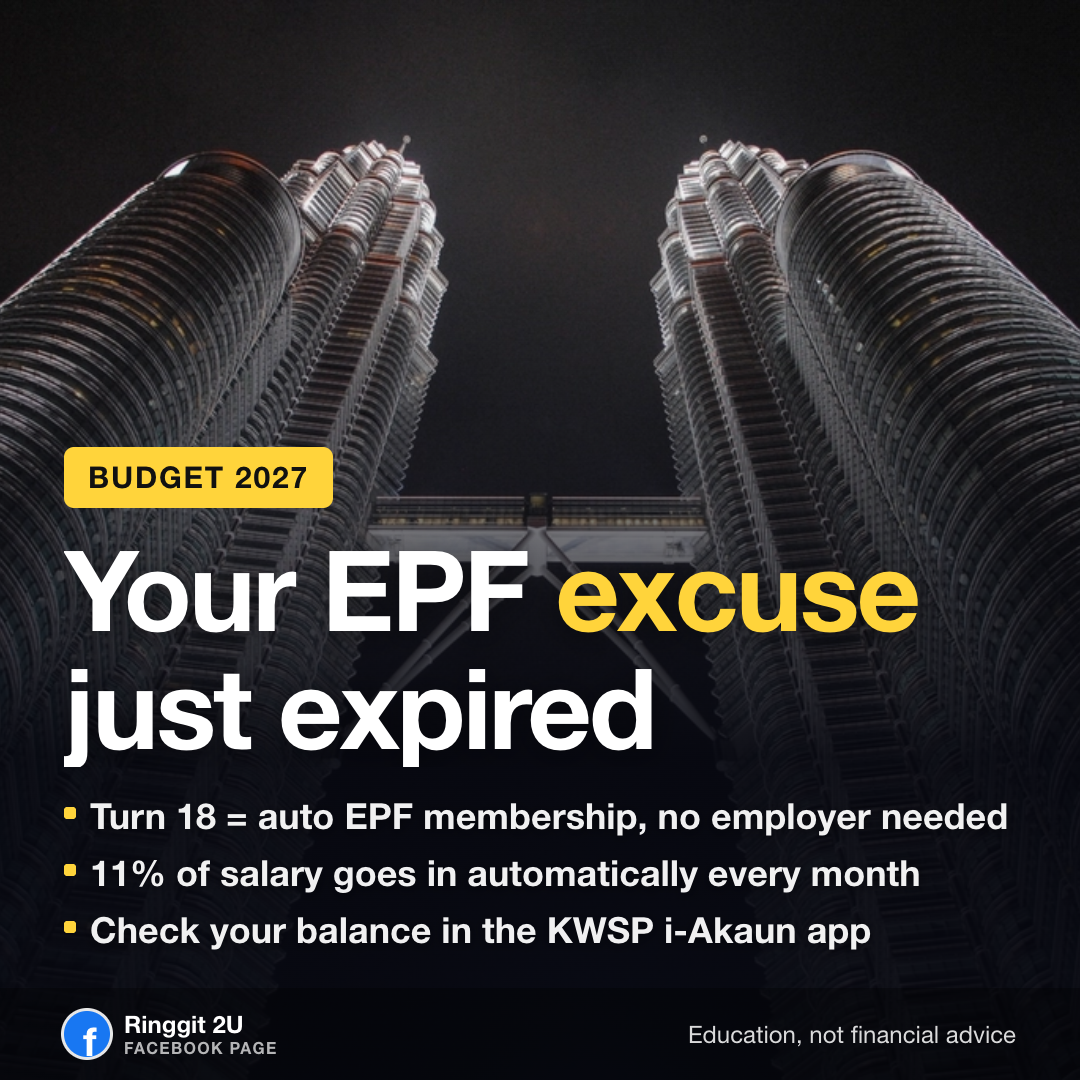
EPF Auto-Registration at 18: What Budget 2027 Changes
Budget 2027 proposes automatic EPF registration for every Malaysian at 18. Learn what it means for your first salary, your three KWSP accounts, and how to check.

Budget 2027: RM2,000 Minimum Wage, RM2,500 Starting Wage – Your Real Take-Home
Budget 2027 raises the minimum wage to RM2,000 and proposes a RM2,500 starting wage for graduates. Here is your actual take-home after EPF, SOCSO and EIS deductions.