73 sen of every extra ringgit goes to spending, says CIMB
CIMB estimates 73 sen of every extra ringgit in 2027 household income goes to spending, driven by Budget 2027 wage and tax measures.
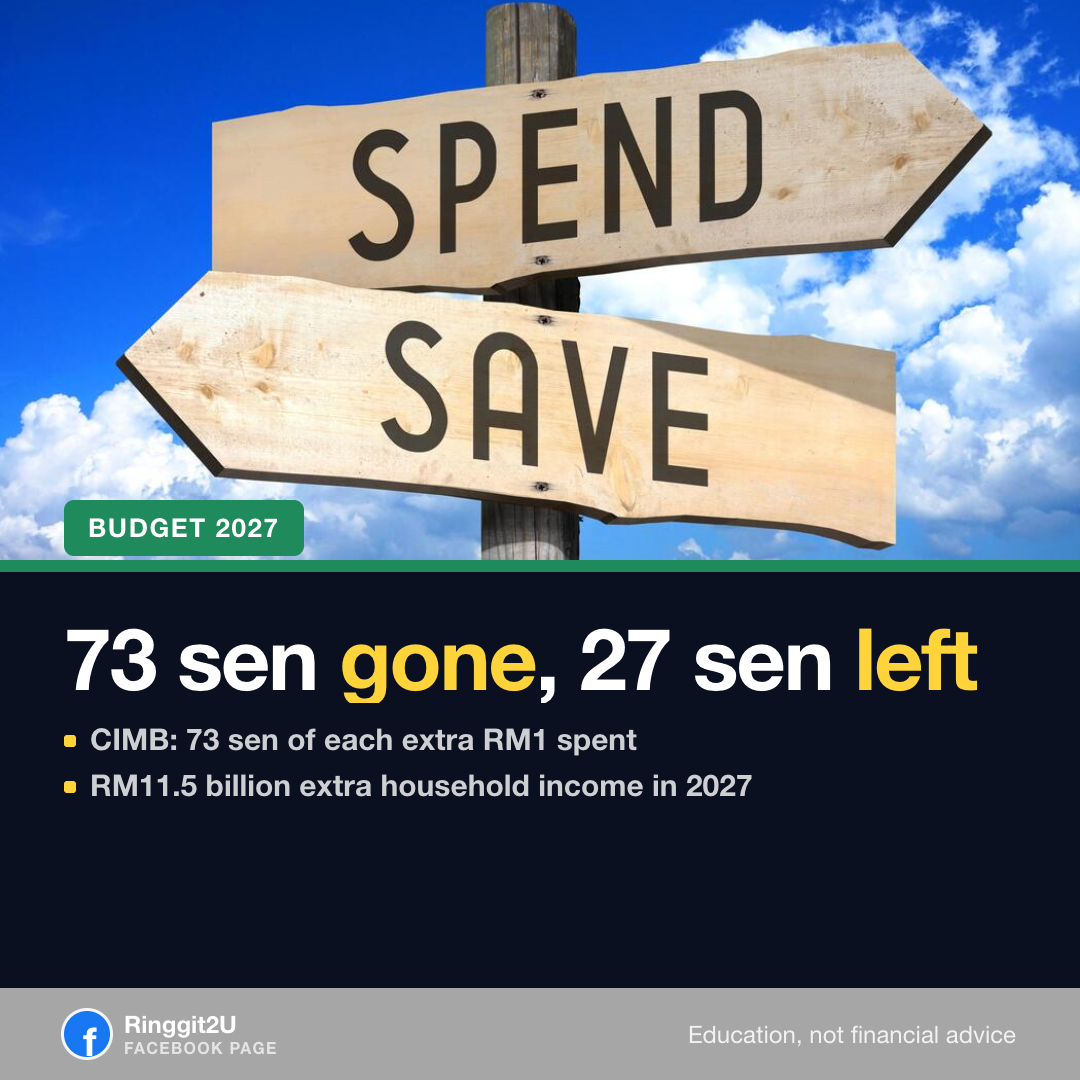
What happened1/5 CIMB: 73 sen of every extra ringgit goes to spending
CIMB Treasury and Markets Research estimates that for every RM1 of extra income Malaysian households receive in 2027, about 73 sen will be spent, not saved.
The estimate is tied to Budget 2027 measures - wage increases, tax cuts and cash transfers - that the bank says add RM11.5 billion to household income and support.
Of that, roughly RM8.4 billion is expected to flow into consumer spending, lifting private consumption growth by 0.5 percentage points and GDP growth by 0.2 percentage points.
The real numbers2/5 The numbers behind the 73 sen
73 senof every extra RM1 spent, not savedRM11.5 billionextra household income from Budget 20274.7%CIMB's revised 2027 GDP growth forecastCIMB revised Malaysia's 2027 GDP growth forecast from 4.5% to 4.7% on the back of these measures. The spending impact is not spread evenly across the year - about four-fifths of the extra consumption lands in the second half of 2027.
Quarter Extra spending Q1 2027 RM300 million Q2 2027 RM1.5 billion Q3 2027 RM4 billion Q4 2027 RM2.6 billion Extra consumer spending by quarter (CIMB estimate)
- 01/03
of every extra RM1 spent, not saved 73 sen The numbers behind the 73 sen of every extra RM1 spent, not saved
How it affects your wallet3/5 Where the extra ringgit comes from
The biggest chunk is wages. The national minimum wage rises from RM1,700 to RM2,000 a month from June 2027, adding an estimated RM2.4 billion in worker income for June to December alone. MSMEs with annual revenue below RM50 million are exempted.
A proposed starting wage of RM2,500 for semi-skilled positions and graduates would add another RM2.8 billion. This is a separate wage benchmark, not the minimum wage, and how it will be implemented has not been detailed yet. GLC living-wage adjustments push the total wage-related boost to RM5.35 billion in 2027, or RM9.1 billion on a full-year basis.
Cash transfers and tax cuts make up the rest: STR and SARA rise to RM16 billion (from RM15 billion in 2026), a special RM1,500 payment for civil servants and RM750 for pensioners costs about RM2.7 billion, and income tax savings are estimated at RM1.8 billion.
Why it matters4/5 Why 73 sen and not 100 sen
The 73 sen figure is a marginal propensity to consume - the share of new income that households actually spend rather than save or pay off debt. It is CIMB's aggregate estimate, not a rule that applies to every household.
The timing matters. Because the minimum wage kicks in in June, most of the extra spending lands in Q3 and Q4. CIMB projects consumption growth of about one percentage point in Q3 and 0.5 percentage point in Q4.
On the cost side, higher wages will raise operating costs for labour-intensive sectors like services and food. CIMB projects core inflation at 2.0% in Q1 2027, rising to 2.5% by Q3, with El Nino adding pressure on food prices early in the year.
- 02/03
RM11.5 billion extra household income from Budget 2027 The numbers behind the 73 sen extra household income from Budget 2027
What to watch5/5 What to watch in 2027
June 2027: the RM2,000 minimum wage takes effect for covered employers. MSMEs with annual revenue below RM50 million are exempted.
Second half of 2027: four-fifths of the extra consumer spending is expected to land here. Q3 is the peak quarter at RM4 billion.
Inflation: core inflation projected at 2.0% in Q1, 2.5% in Q3, 2.4% in Q4. El Nino effects on food prices are expected early in the year.
- 03/03
The numbers behind the 73 sen ***Your receipt ***Q1 2027 RM300 million Q2 2027 RM1.5 billion Q3 2027 RM4 billion Q4 2027 RM2.6 billion ringgit2u.com ·Today Extra consumer spending by quarter (CIMB estimate)
Questions people ask
Does the 73 sen mean I will definitely spend 73 sen of my extra income?
No. It is CIMB's aggregate estimate across all households. Your own share depends on whether you use the extra ringgit to pay off debt, save, or spend. The 73 sen is a planning assumption for the macro forecast, not a personal rule.
Is the RM2,500 starting wage the same as the new RM2,000 minimum wage?
No. The RM2,000 minimum wage is the legal floor from June 2027. The RM2,500 figure is a proposed starting wage benchmark for semi-skilled positions and graduates under a separate wage-framework reform. Implementation details have not been announced yet.
When does the RM2,000 minimum wage actually start?
From June 2027. It applies to covered employers. Micro, small and medium enterprises with annual revenue below RM50 million are exempted to give them time to adapt.
Source: LHDNBerita HarianBernama
Keep reading

MediAsas Explained: RM65 Basic Plan, RM100,000 Cover, 2027 Start
MediAsas is a voluntary standard medical plan aimed at the M40, from January 2027. Premiums from RM65, RM100,000 yearly cover, EPF payment and how to prepare.

OPR at 2.75%: What a 0.25-Point Move Does to Your Home Loan
BNM signalled the OPR could move from 2.75%. Instalment tables for RM400,000 and RM300,000 floating-rate home loans and how to find your own number.
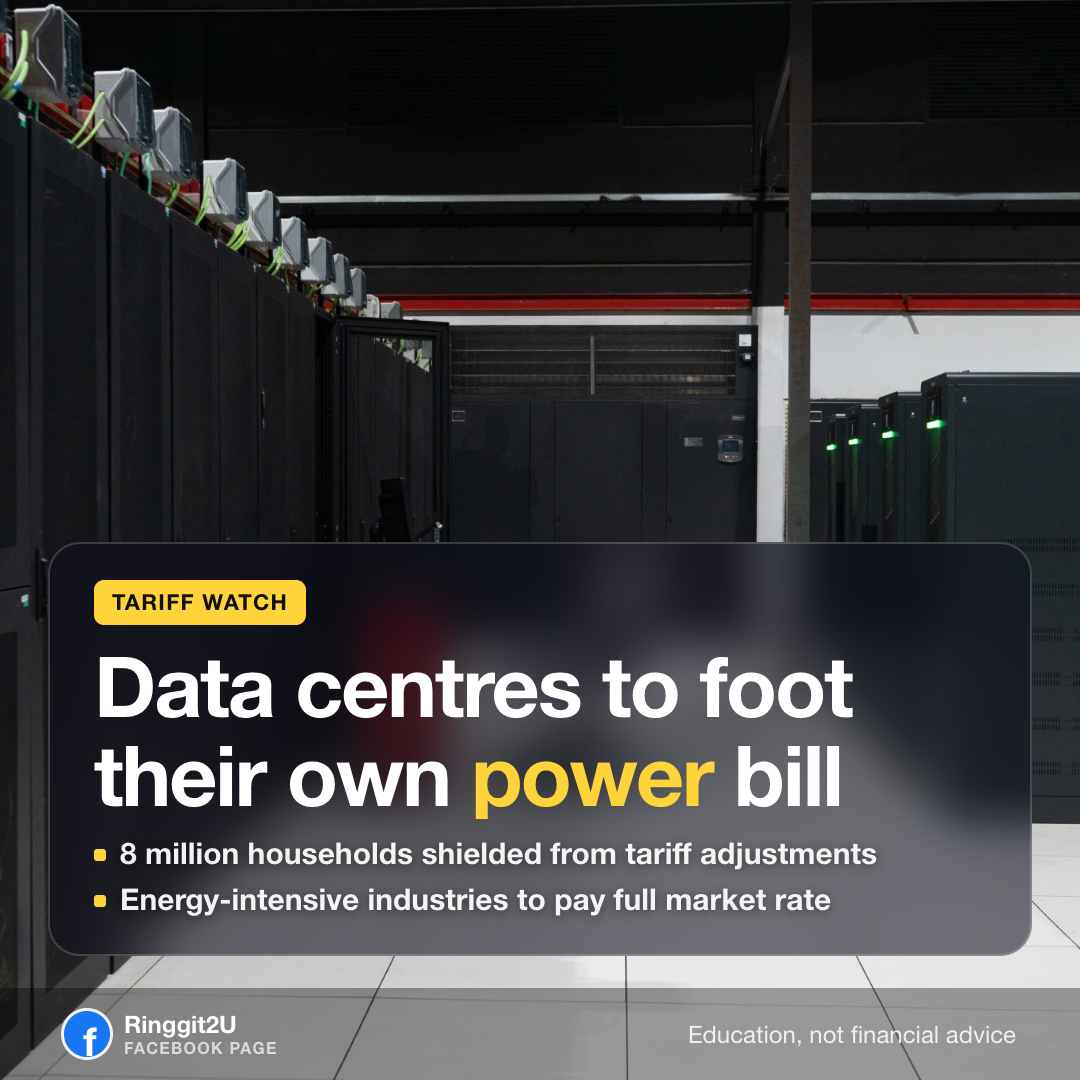
Data Centres to Pay Full Power Rates: What Your TNB Bill Costs Now
Data centres and heavy industry face full electricity rates from 2027 while 8 million homes stay protected. The domestic rate card, a 400 kWh bill and how to check yours.