LHDN investigates 408,726 tax cases, issues RM7.7bil in additional assessments
LHDN's chief executive announced RM7.7bil in additional tax assessments from 408,726 cases, with new AI tools and e-Invoice analytics added to the compliance toolkit.
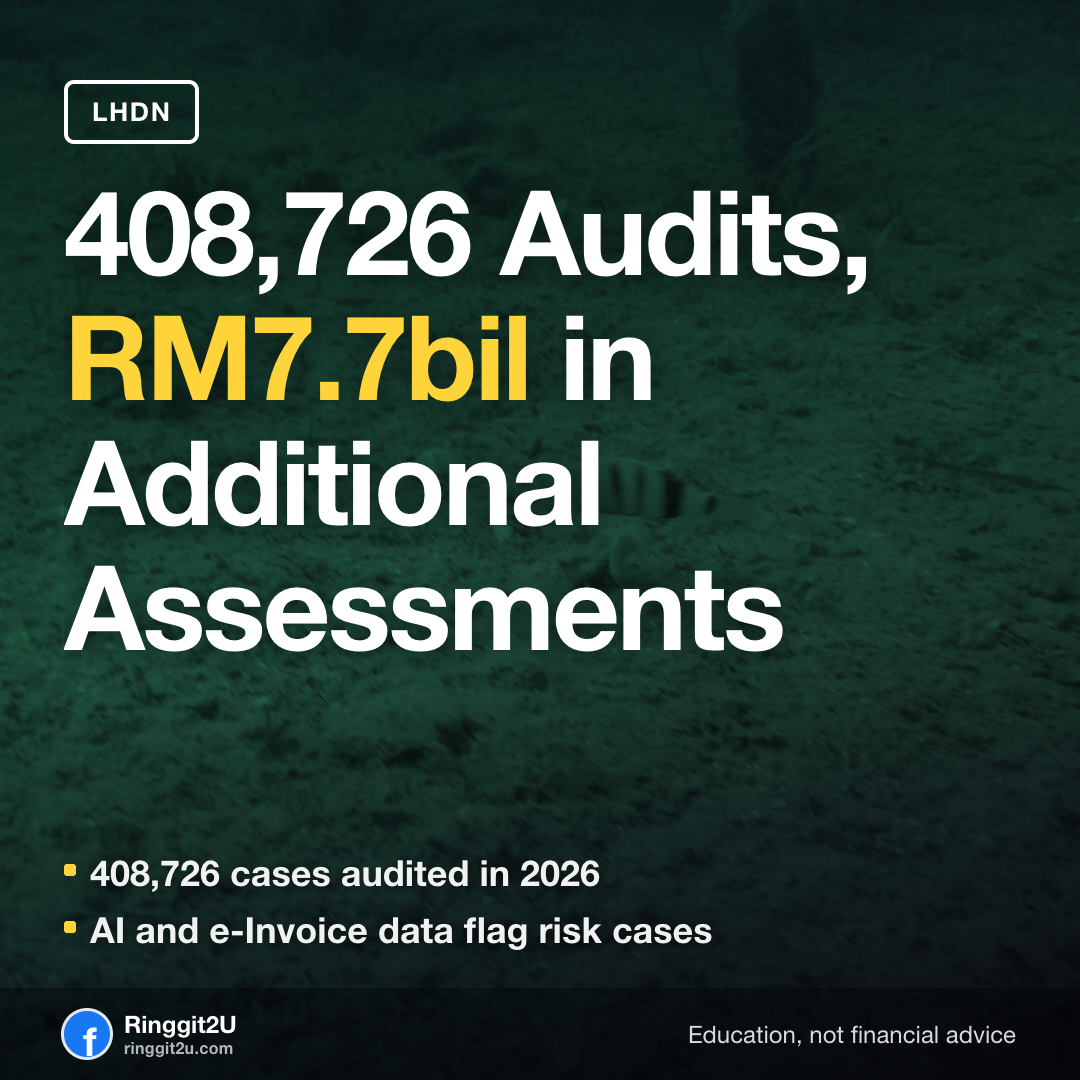
What happened1/6 RM7.7bil in additional tax assessments from 408,726 cases
LHDN chief executive Datuk Abu Tariq Jamaluddin told the Inland Revenue Board's Innovation and Integrity Day in Cyberjaya on Tuesday (Nov 3) that 408,726 cases were audited and investigated this year.
The findings led to additional tax assessments of about RM7.7bil. That is the value of additional tax assessments LHDN determined were owed but not previously paid. Whether penalties are included in that figure has not been specified.
Abu Tariq said the compliance drive targets high-net-worth individuals, the tobacco, liquor and vape sectors, e-Invoice data, and information on Malaysian taxpayers' overseas accounts.
The real numbers2/6 The three figures behind the crackdown
408,726cases audited and investigated in 2026RM7.7biladditional tax assessments issued7,700+cases flagged by AI anomaly detectionThe 7,700 cases flagged by the MyInvois Anomaly Detection Model are the pipeline for the next round of audits. LHDN says those cases carry tax risks that need investigation.
e.g. RM7.7bil spread across 408,726 cases averages about RM18,837 per case.
cases audited and investigated in 2026 408,726 01/02The three figures behind the crackdown cases audited and investigated in 2026
Why it matters3/6 Four areas LHDN is targeting for compliance action
Abu Tariq named four focus areas: high-net-worth individuals, the tobacco, liquor and vape sectors, e-Invoice data, and overseas accounts held by Malaysian taxpayers.
He framed the push as protecting honest taxpayers: "These compliance and enforcement measures are important to ensuring fairness in the country's tax system and protecting the interests of taxpayers who fulfil their obligations."
Voluntary compliance stays the priority, but he warned that firm action will follow for those who deliberately evade tax responsibilities.
How it works4/6 How LHDN's new AI tools spot tax gaps
The main innovation focus this year is artificial intelligence in tax administration. LHDN listed several tools already built or in development:
HAFY-Tax Assist is a conversational AI chatbot that answers taxpayer questions around the clock. Behavioural Analytics studies patterns across taxpayer groups so LHDN can target monitoring where the risk is highest.
The MyInvois Advanced Analytics Anomaly Detection Model scans e-Invoice submissions and flagged more than 7,700 cases carrying tax risks. An Instrument Recognition and Intelligence Model reads document types and determines the correct stamp duty rate automatically. A Next-Best Action Predictive Model picks the most suitable collection step based on multiple criteria.
- 02/02
RM7.7bil additional tax assessments issued The three figures behind the crackdown additional tax assessments issued
How it affects your wallet5/6 What this means if you earn a normal salary
For most salaried readers, the audit wave is not about you. LHDN's stated targets are high-net-worth individuals, tobacco/liquor/vape operators, e-Invoice mismatches and undeclared overseas accounts.
e.g. A single employee earning RM3,000 a month (RM36,000 a year) gets the RM9,000 individual relief, leaving RM27,000 chargeable income. Tax on that slice works out to about RM360. The RM400 rebate for chargeable income of RM35,000 or less wipes it to zero. You owe nothing in tax. Your audit risk from this drive is low unless you have undeclared side income or overseas accounts that create e-Invoice mismatches.
Where ordinary earners can trip up is e-Invoice. If a side-gig platform, freelance client or small-business buyer issues an e-Invoice under your name for income you never declared, the anomaly model can flag the mismatch. Keep your MyTax records and e-Invoice receipts aligned.
What to do, step by step6/6 Four things to check before your next e-Filing
- Log in to MyTax at hasil.gov.my and review your income records. Make sure every employer, side income and rental income you received in 2026 appears.
- Keep your e-Invoice receipts (MyInvois) for any freelance, gig or small-business income. Mismatches between what a platform reports and what you declare are what the anomaly model catches.
- If you hold overseas bank accounts or investments, declare them. LHDN named overseas-account data as a specific compliance target this year.
- Stuck on a rule or a deduction? Try HAFY-Tax Assist, LHDN's AI chatbot, for quick answers before queueing at a counter.
Questions people ask
Does RM7.7bil mean LHDN collected RM7.7bil in cash this year?
No. RM7.7bil is the total value of additional tax assessments issued, meaning tax that LHDN determined was owed but not previously paid. Collection happens over time and some assessments may be appealed.
Will my salary or EPF contribution be affected by these audits?
No. EPF contributions and your employer's PCB deductions are separate from LHDN's audit of undeclared or under-reported income. Audits target cases where declared income does not match records, not routine salary earners who file correctly.
What happens if the AI flags my e-Invoice by mistake?
A flag is not a penalty. It means LHDN wants to review the case. You can respond with supporting documents. Use HAFY-Tax Assist or contact LHDN through MyTax to clarify before any formal action.
Keep reading

US couple stranded in Cambodia after RM727,000 cruise retirement fails
A US couple sold their house and car for a RM727,000 cabin on a residential cruise ship, then got stranded in Cambodia when the operator ran out of money after 17 months.

AI Selloff and Recession Fears: What It Means for Your EPF and Unit Trust
Reuters called October's AI selloff brutal as the Nasdaq-100 neared correction territory. Here is what the global move means for your EPF and unit trust.

Santan, Chinese Potatoes Get Price Ceiling for First Time from 4 November
Santan and Chinese potatoes are two of 11 items under maximum price control from 4 to 10 November for Deepavali. What the KPDN caps mean for your kitchen budget.