World Bank sees 23% commodity price jump by end of 2026
The World Bank's latest outlook sees commodity prices climbing 23% by end of 2026, hitting food and energy hardest.
What happened1/5 World Bank projects a 23% commodity price rise by end of 2026
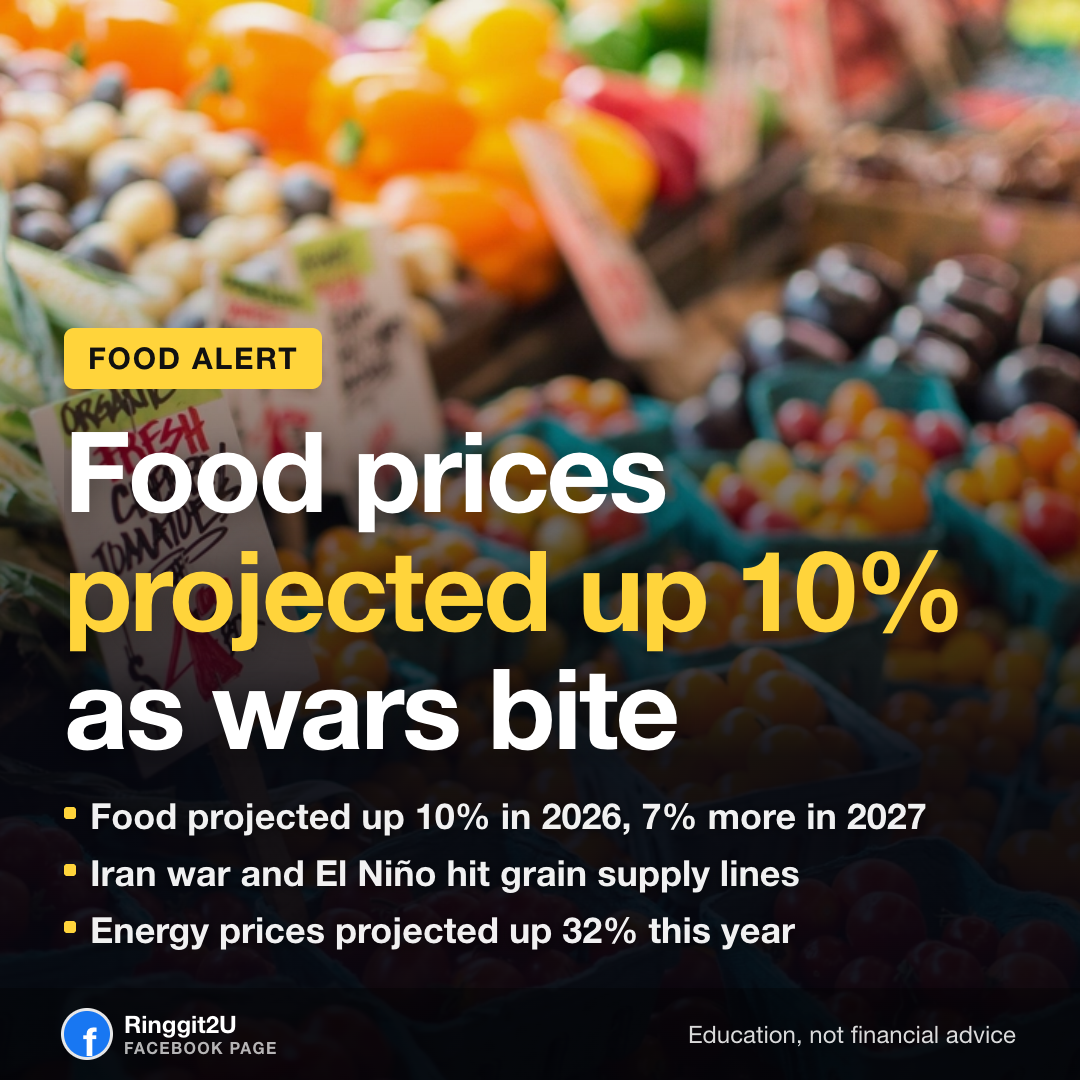
The World Bank's Commodity Markets Outlook, released Wednesday, projects global commodity prices will climb 23% by the end of 2026. Energy prices are at four-year highs. Food prices are being pushed up by the Iran war, the Russia-Ukraine conflict and an extreme El Niño.
"Commodity markets are being hit by several major shocks at once," said Ayhan Kose, the World Bank's deputy chief economist, in the report's accompanying statement. He warned that higher energy costs and trade disruptions threaten inflation, food insecurity and economic growth.
The real numbers2/5 The three numbers that drive the warning
10% + 7%food price rise in 2026 and 202732%energy price increase projected this year5.2%global oil supply drop in 2026Food prices are expected to rise 10% in 2026 and another 7% in 2027, driven by conflict-affected grain supply lines, El Niño weather and high fuel and fertiliser costs. Energy prices are projected to jump 32% this year before moderating in 2027. Global oil supply is set to fall 5.2% in 2026, the largest decline outside a pandemic in more than four decades.
Commodity 2026 forecast 2027 forecast Food +10% +7% Energy +32% Moderating Overall commodities +23% (by year-end) — World Bank Commodity Markets Outlook, Oct 2026
- 01/03
food price rise in 2026 and 2027 10% + 7% The three numbers that drive the warning food price rise in 2026 and 2027
Why it matters3/5 Two shocks are hitting supply at the same time
The first shock is the war. According to the report, the United States and Israel launched a war against Iran in late February. Iran responded with attacks on US allies and virtually choked the Strait of Hormuz, a key route for oil, natural gas and fertiliser. Global energy and fertiliser prices have skyrocketed since then.
The second shock is El Niño, a naturally occurring weather phenomenon set to bring higher temperatures to much of the planet, with its impact compounding man-made climate change. For food producers, it means more flooding, droughts and heat stress across multiple growing regions.
The World Bank's baseline forecast already assumes conflicts in Iran and Ukraine do not intensify. The April 2026 predictions were significantly lower than these October numbers.
How it affects your wallet4/5 How a global price shock reaches a Malaysian kitchen
The World Bank report tracks global commodity prices, not Malaysian retail prices. It does not give a Malaysia-specific inflation figure or a pass-through timeline. But the transmission path is straightforward: higher energy and fertiliser costs raise what food producers pay to grow and process staples, and higher grain prices feed into what bakeries and mamak stalls pay for flour.
When the Strait of Hormuz is disrupted, the cost of shipping oil, natural gas and fertiliser rises, and insurance premiums for tankers and bulk carriers on that route jump. Those costs get built into the landed price of imported goods.
e.g. If wheat costs a local bakery 15% more, and flour is roughly a third of the ingredient cost of a loaf of bread, the direct ingredient cost of that loaf rises about 5%. Whether the bakery passes that on depends on competition, contracts and subsidies, which the report does not address.
- 02/03
32% energy price increase projected this year The three numbers that drive the warning energy price increase projected this year
What to watch5/5 The adverse scenario the report flags for 2027
The World Bank warns that if three risks hit together, the picture gets much worse: an especially strong El Niño, intensifying attacks on Black Sea grain shipments during the Russia-Ukraine war, and further energy price spikes from the Iran war.
In that combined scenario, Brent crude could average $105 a barrel in 2027, and food commodity prices could be 12% higher than the baseline forecast, surpassing their 2022 peak. The report also notes that oil consumption is forecast to fall 2.5% this year, the third-largest drop after the pandemic and the 1980 oil crisis, which partly cushions the price impact.
Since the Iran war began, the World Bank has provided $8.7 billion in emergency support for vulnerable countries. Kose said the priority must be protecting the poorest people and supporting low-income countries already carrying heavy debt.
- 03/03
The three numbers that drive the warning Monthly statement Food +7% Energy Moderating Overall commodities — World Bank Commodity Markets Outlook, Oct 2026
Questions people ask
Will this immediately make my groceries more expensive in Malaysia?
The World Bank report tracks global commodity prices, not Malaysian retail prices. It does not give a Malaysia-specific pass-through timeline. Check BNM's monthly inflation data or the DOS price index for the local picture. The exact effect depends on import contracts, subsidies and competition.
What is El Niño and why does it matter for food prices?
El Niño is a naturally occurring weather phenomenon set to bring higher temperatures to much of the planet, with its impact compounding man-made climate change. For food producers it brings flooding, droughts and heat stress to multiple growing regions at once.
What is the Strait of Hormuz and why does it affect food?
The Strait of Hormuz is a key supply route for oil, natural gas and fertiliser. According to the World Bank report, Iran virtually choked this route after the war began in late February 2026, pushing up energy and fertiliser prices globally.
Source: Iol.co.za
Keep reading

Brent crude hits $112 after US kills Iranian commander, Houthi strikes
Brent crude surged to $112.11 after the US killed an Iranian commander and Houthis attacked Saudi energy sites. Here is what it means for your pump price.

Johor data centres could use 90% of new Peninsular power by 2031
BMI projects Johor data centres will need 30 TWh by 2031, over 90% of all new Peninsular electricity. TNB plans RM43B in grid upgrades. What it means for households.
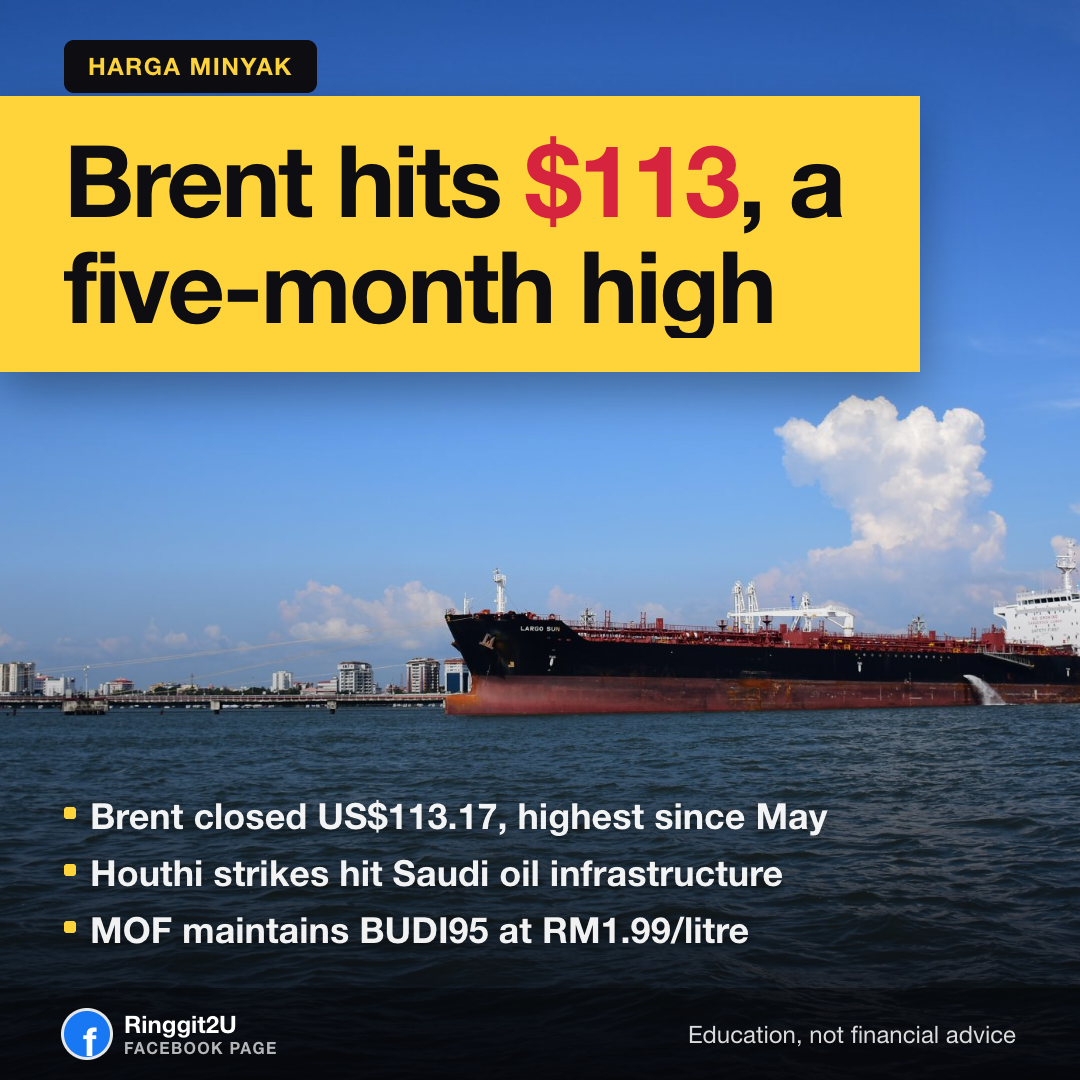
Brent Oil Hits US$113, Highest Since May, After Houthi Strikes
Brent crude hit US$113.17, its highest close since May, after Houthi strikes on Saudi oil infrastructure. What it means for your RON95 price at the pump.