1.8 million cyberattacks hit Malaysia overnight; MKN keeps threat at moderate
FortiGuard Labs logged 1.8 million attacks on home routers and web servers overnight; MKN kept the national threat level at moderate.
What happened1/6 FortiGuard map shows 1.8 million attacks on Malaysia in 24 hours
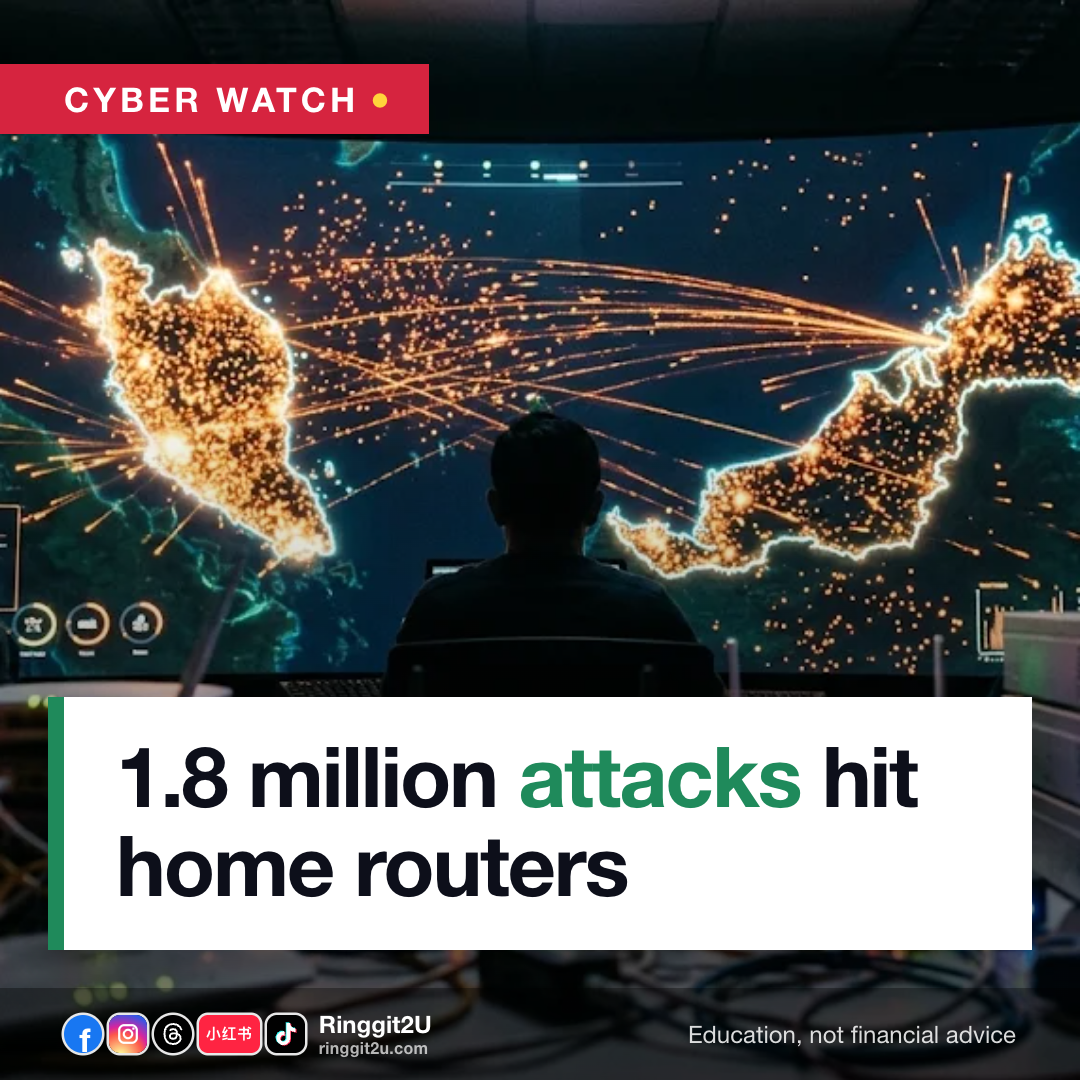
FortiGuard Labs' Live Threat Map recorded 1.8 million cyberattacks targeting Malaysia over the past 24 hours, placing the country 18th among the top 20 targeted.
Cyberjaya, Shah Alam and Petaling Jaya appeared among the locations receiving threats. Most of the activity involved attempts to breach web servers and internet routers used in homes and offices.
Attacks were detected originating from France, Bulgaria, Indonesia, Japan and China, with threat levels categorised as critical and high.
The real numbers2/6 Five countries of origin, two threat levels
1.8 millionattacks in 24 hours18thamong top 20 targeted countries5 countriesof origin: FR, BG, ID, JP, CNThe map listed Malaysia at 18th place among the top 20 countries targeted. Threat activity came from five countries and was tagged at two severity levels.
- 01/02
1.8 million attacks in 24 hours Five countries of origin, two threat levels attacks in 24 hours
What happened3/6 Home routers and web servers take the brunt of overnight attacks
FortiGuard Labs recorded 1.8 million attempts aimed at web servers and internet routers in homes and offices. The National Cyber Security Agency and the national cyber coordination and command centre are continually monitoring threats, with MKN keeping the national cyber threat level at moderate.
The National Security Council (MKN) confirmed the national cyber threat level remains at a moderate level. The National Cyber Security Agency and the national cyber coordination and command centre are continually monitoring threats.
Bank Negara Malaysia is implementing comprehensive preparedness measures for critical information infrastructure, including continuous monitoring of cybersecurity status across the sector.
How it affects your wallet4/6 If payment gateways go down, your e-wallet stops working
Most of the overnight activity targeted home routers and web servers, not bank core systems. But a wider disruption to payment gateways or telco fibre could freeze QR payments, e-wallets and ATM withdrawals at the same time.
NADMA advises every household to keep an offline cash reserve in small denominations (RM5, RM10, RM20), a physical MyKad and Touch 'n Go card, and a battery-powered AM/FM radio tuned to RTM. ATMs depend on both power and telco connections; if either fails, you cannot withdraw cash.
e.g. if a cyber incident knocks out a major telco's fibre backbone, your Touch 'n Go eWallet, DuitNow QR and online banking app all go dark together. A few RM5 and RM10 notes in your wallet keep you buying nasi lemak and topping up petrol.
18th 02/02among top 20 targeted countries Five countries of origin, two threat levels among top 20 targeted countries
What to do, step by step5/6 What to do if a cyber disruption hits your banking
NADMA and CyberSecurity Malaysia published this checklist for households during a tech or cyber disruption.
- Keep a small offline cash reserve at home in RM5, RM10 and RM20 notes so you can buy food and fuel if ATMs and e-wallets go offline.
- Store a physical MyKad, Touch 'n Go card and driving licence in a visible spot. Digital apps like MyJPJ or eWallet cannot authenticate you at toll booths or roadblocks if mobile networks fail.
- Write down Cyber999 (1-300-88-2999 or +6019-2665850) and the National Scam Response Centre (997) in a physical notebook, not just your phone. Also save TNB CareLine 15454 and MERS 999.
- During any outage, ignore SMS or email claiming your TNB account is suspended or that you must update your TAC immediately. Legitimate agencies do not ask for login credentials during a restoration window.
- If you spot unauthorised transactions or identity theft during a breach, call NSRC at 997 or Cyber999 right away. Do not wait for the outage to end.
Myth vs fact6/6 The Batu Pahat counter-attack and the 30-country food panic
MythSocial media posts claimed a person in Batu Pahat, Johor, launched retaliatory cyber counter-attacks until the early hours, and that over 30 countries are suddenly stockpiling food for a global crisis.FactMKN warned the public against unverified cyberattack claims spread on social media. The food-stockpiling posts were debunked: governments are updating routine civil-defence guidelines for grid failures and cyberattacks on critical infrastructure, not preparing for starvation. The Batu Pahat posts circulated as jokes and unverified claims; no official source confirmed any counter-attack activity.
Questions people ask
Do I need to withdraw money from my bank account because of the cyberattacks?
No. MKN confirmed the threat level is moderate and Bank Negara Malaysia is monitoring critical information infrastructure. The overnight activity targeted home routers and web servers, not bank core systems. Keep a small offline cash reserve for convenience, but there is no reason to empty your account.
What is the difference between NSRC 997 and Cyber999?
NSRC at 997 handles financial scams and unauthorised transactions. Cyber999 (1-300-88-2999 or +6019-2665850) is CyberSecurity Malaysia's incident-response line for hacking, malware and cyber threats. Call 997 if money moved without your consent; call Cyber999 if your device or network is compromised.
Is my home router at risk from these attacks?
The FortiGuard map showed most activity targeting internet routers used in homes and offices. Keep your router firmware updated, change the default admin password, and disable remote management if you do not need it. These are basic settings on every router's admin page.