26% of Malaysian workers got no pay rise in over a year, report finds
A quarter of Malaysian workers received no salary adjustment in at least 12 months, and they are far more likely to leave their jobs.
What happened1/6 A quarter of Malaysian workers saw zero pay movement for 12 months
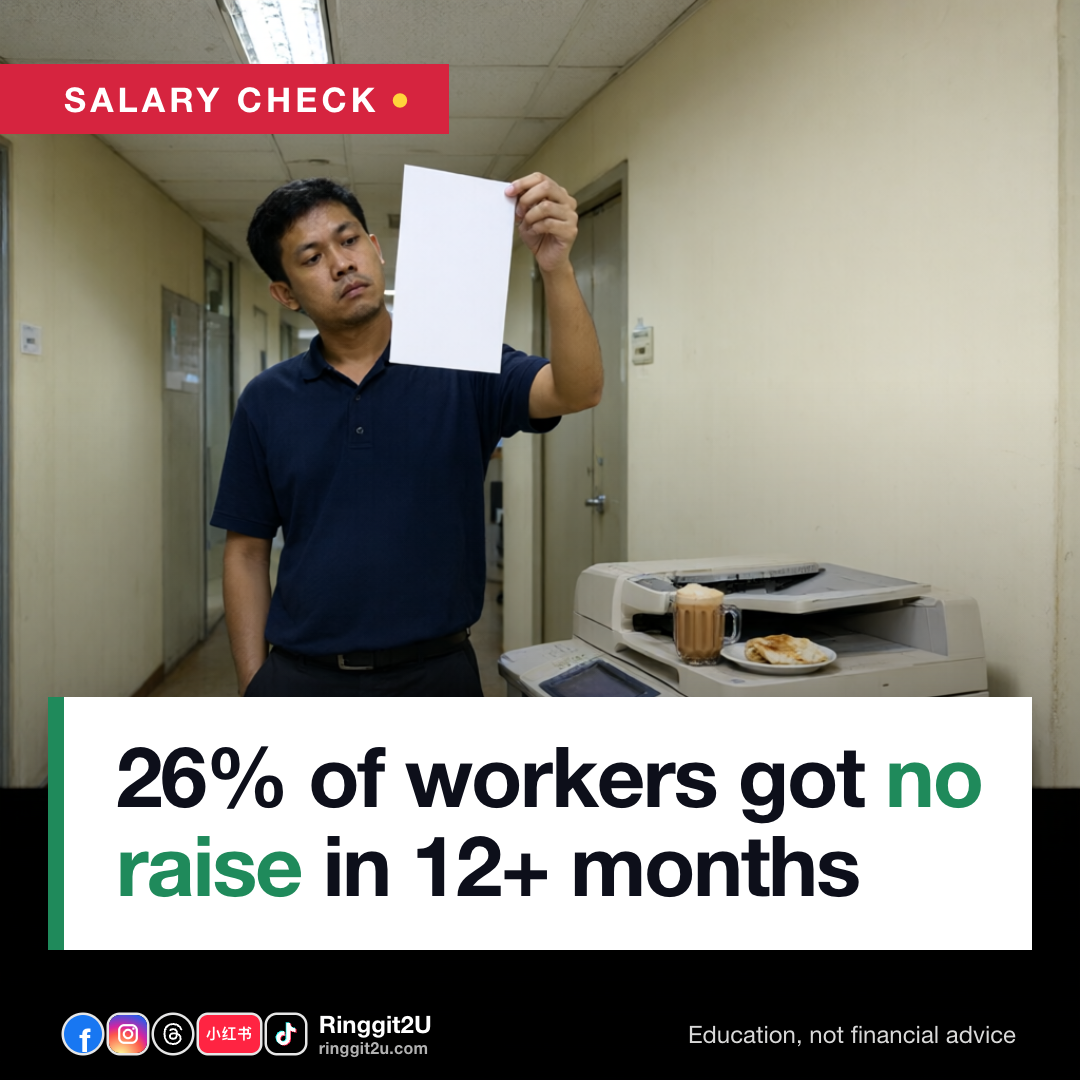
According to the Singapore and Malaysia Salary Guide Report 2027 published by Omni HR with PAYGAP Asia, 26 per cent of Malaysian workers received no salary change for at least 12 months.
The report draws on anonymised payroll and HR records from over 200 employers across seven Asia Pacific markets, plus worker salary feedback and sentiment data. It was released from Petaling Jaya.
Workers in that 26 per cent group are 2.5 times more likely to resign than those who did receive a pay change.
The real numbers2/6 The report's key figures on wage stagnation and retention
26%workers with no pay change in 12 months36%no pay change among 1-year-plus workers2.5xhigher resignation risk for that groupThe share of workers with no pay change climbs to 36 per cent among those who have been with their employer for more than a year. Longer tenure does not protect you from a frozen salary.
Job satisfaction matters as much as the number on the payslip. 91 per cent of workers who are highly satisfied with their job plan to stay. Among the highly dissatisfied, only 6 per cent do.
Workers who are satisfied even when paid at or below their peers are three times more likely to stay than unhappy workers paid more: 75 per cent versus 25 per cent.

Photo: Photo: Kristin Hardwick / CC0 1.0 Why it matters3/6 Why a frozen salary pushes people out the door
Omni HR chief executive Brian Ip said salary is the first thing workers compare, but it is not the only thing that keeps them. How fair the raise feels and whether the work has meaning both shape the decision to stay or leave.
The report frames a missing pay review as an early warning sign. When someone has been with a company for over a year and sees no financial recognition, they read that as their contribution going unnoticed.
Ip urged employers to identify workers who have had no salary adjustment in the past 12 months and start a conversation before the resignation letter arrives, not after.
The satisfaction data reinforces this: a happy worker paid at peer level stays 75 per cent of the time. An unhappy worker paid above peer level stays only 25 per cent. Money alone does not fix a bad workplace.
How it affects your wallet4/6 What a frozen salary does to your real income
If your pay has not moved in 12 months, every ringgit you earn buys less than it did a year ago. Your nominal salary is flat while your costs are not. The report does not publish a specific inflation-adjusted figure, but the direction is clear: a flat salary is a real-terms pay cut.
For someone earning a fixed monthly wage, even a small rise in transport, food or utility costs eats into the same take-home amount. The 26 per cent group is absorbing that squeeze without a matching adjustment.
The report shows workers with no pay change are 2.5 times likelier to resign, and that fairness perception and meaningful work shape the stay-or-leave decision. The data shows the pattern; it does not prove every resignation in that group was about peer pay.
workers with no pay change in 12 months 26% 01/02The report's key figures on wage stagnation and retention workers with no pay change in 12 months
What to do, step by step5/6 What to do if you are in the 26 per cent
- Check your employment contract and company handbook for any stated salary-review cycle. Some companies promise an annual review; others leave it discretionary. Know what you are actually owed.
- Write down your contributions from the past 12 months: projects completed, revenue brought in, responsibilities you absorbed, overtime or weekend work. Concrete numbers beat vague feelings.
- Request a formal salary-review meeting with your manager. Frame it around your documented contributions and the market rate for your role, not around what a colleague earns.
- The report recommends employers start a conversation before the resignation letter arrives. Whether to stay or leave is your call, but the data shows the 26 per cent group is 2.5 times likelier to quit, so a plan beats drifting.
- Keep your EPF contributions and emergency savings intact while you search. Do not resign without another offer in hand unless your finances can cover at least three months of expenses.
Worth knowing6/6 Worth knowing
The report covers seven Asia Pacific markets. The 26 per cent figure is explicitly Malaysia-specific. The Utusan write-up does not state whether the 91 per cent and 6 per cent satisfaction figures are Malaysia-only or across all markets, so treat them as indicative rather than a Malaysian-specific number.
- 02/02
36% no pay change among 1-year-plus workers The report's key figures on wage stagnation and retention no pay change among 1-year-plus workers
Questions people ask
Does no pay change in 12 months mean my company is breaking the law?
Not necessarily. Malaysian law sets a minimum wage floor but does not require an annual raise unless your employment contract or collective agreement promises one. Check your contract first. If a promised review never happened, that is a contract issue, not a statutory violation.
The report says 2.5 times more likely to quit. Does that mean I should resign?
It means workers in that group are statistically more likely to leave, not that you should. The report recommends employers identify workers with no pay change and start conversations early. From your side, that conversation is the logical first step before any resignation decision. Resigning without another offer is a bigger financial risk than staying while you plan.
Is this the same as the minimum wage discussion?
No. The minimum wage is the legal floor every employer must pay. This report is about workers who are already above that floor but whose salary has not moved at all in over a year. Different issue, different policy lever.
Source: LHDNUtusan Malaysia