Students Posting Resumes on Social Media Face Cyber Fraud Risk
Public resume posts expose students' addresses and phone numbers to scammers who impersonate HR officers for fake internship fees.
What happened1/4 Two Malaysian experts flag public resume posts as a fraud gateway
Prof Madya Dr Zubaile Abdullah, Deputy Dean at UTHM's Faculty of Computer Science and Information Technology and Senior Researcher at its Centre for Cybersecurity and Data Intelligence, told Bernama that students posting resumes in public Facebook groups hand cybercriminals their full name, home address and phone number.
Prof Dr Zarina Shukur from UKM's Faculty of Technology and Information Sciences added that exposing a home address puts the student's entire family at risk, not just the student.
How it affects your wallet2/4 Fake internship offers ask for registration fees and bank details
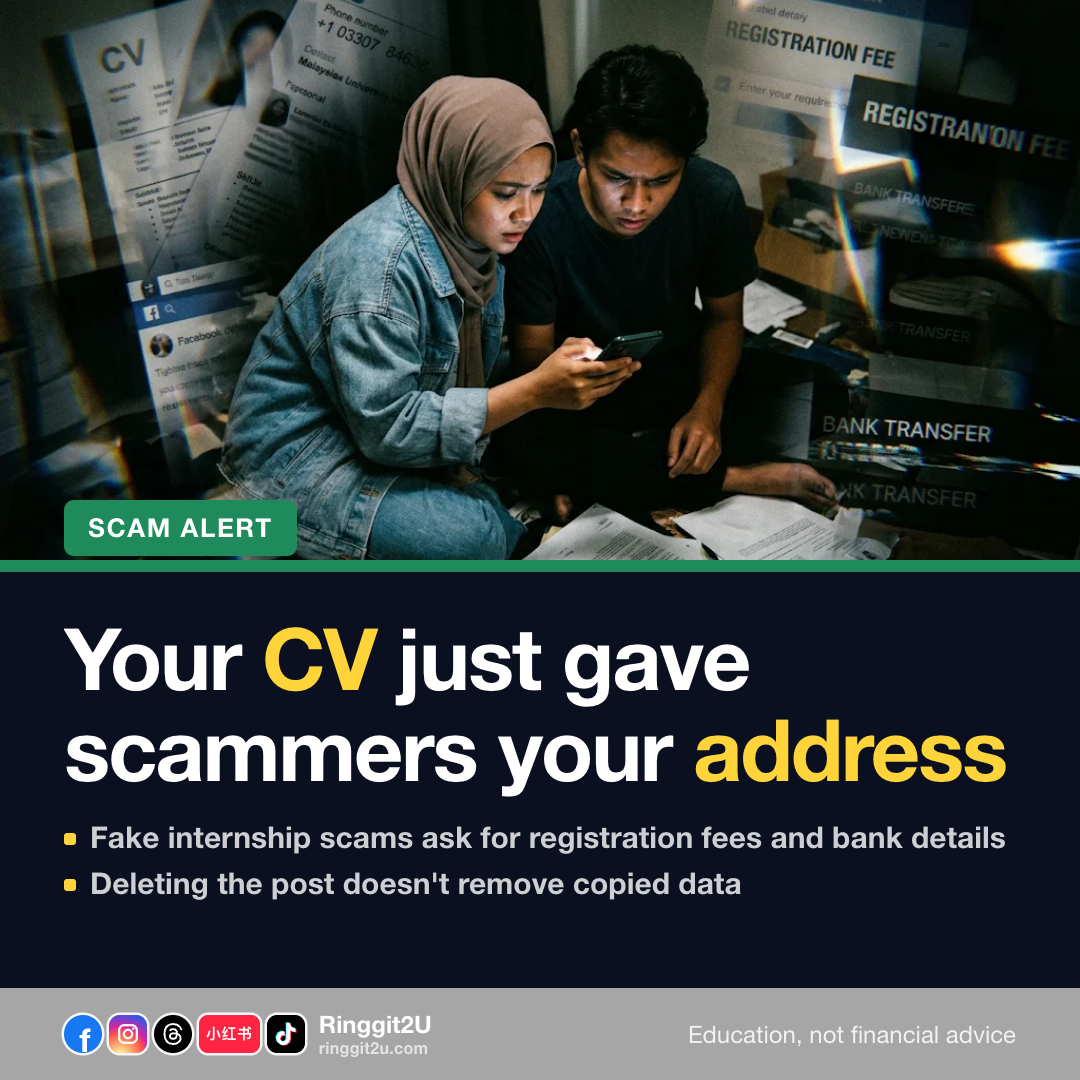
Scammers copy resume details and pose as company representatives or HR officers. They ask students to pay a registration fee, a training deposit, or share bank account information before the internship even starts.
The same data fuels phishing through fake WhatsApp messages and emails designed to steal passwords or install malware on the student's phone. Dr Zubaile said combining a student's full name, university and academic background lets criminals build convincing social engineering attacks.

Photo: Photo: Bob Richards / CC0 1.0 What to do, step by step3/4 Keep two resume versions and report suspicious offers to 997
- Prepare a simple resume for social media: name, degree, skills. Leave out your home address, phone number and lecturer names.
- Keep a full resume for applications through trusted portals like JobStreet and Glassdoor.
- Share detailed documents only with employers who contact you via an official company email or a verified application channel.
- If you paid money to a suspicious offer, call the National Scam Response Centre at 997 and contact your bank immediately. The faster you report, the better the chance of freezing the money.
Why it matters4/4 Deleting the post does not erase your data from a public group
Dr Zubaile explained that once a resume is uploaded to a public Facebook group, anyone can copy, save and redistribute it even after the original post is deleted.
Public groups also let outsiders view the member list and shared content without joining. That means your resume is visible to people you never intended to reach, including scammers scanning for targets.
Questions people ask
Can a scammer still use my resume after I delete the post?
Yes. Dr Zubaile said uploaded information can be copied, saved and spread to others without your knowledge, even after the original post is removed.
What do I do if I paid money to a fake internship offer?
Call the National Scam Response Centre at 997 immediately and contact your bank. The faster you report, the better the chance of freezing the money.
Is a private Facebook group safe for posting a resume?
The experts specifically flagged public groups where anyone can view content and member lists. Even in private groups, avoid sharing your home address, phone number and lecturer details.
Source: Bank Negara MalaysiaSinar Harian