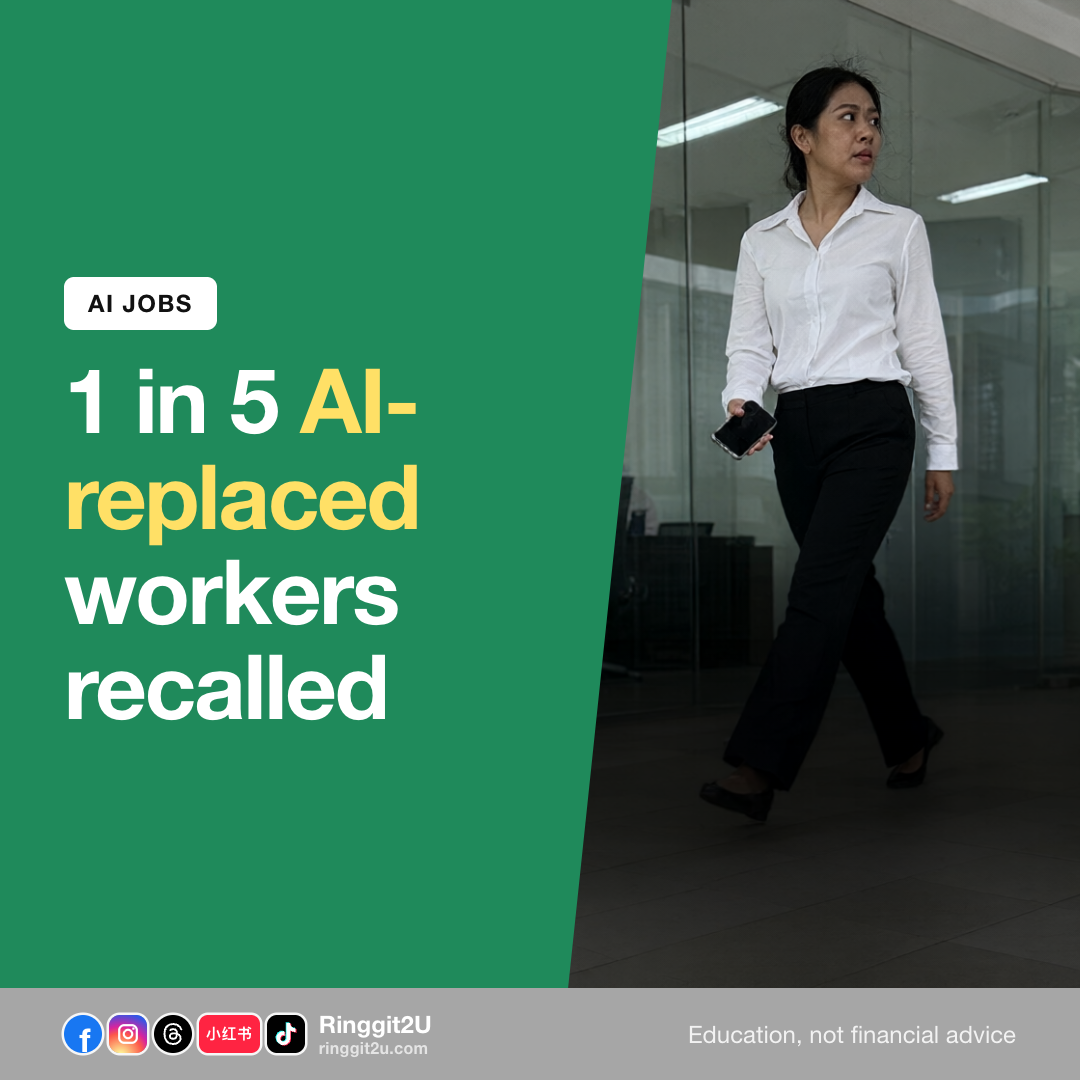
Nearly 1 in 5 US Workers Replaced by AI Are Being Called Back
SHL survey: 19.1% of American workers replaced by AI were asked back, with 51% wanting a substantial pay increase before returning.
What happened1/6 19.1% of US workers replaced by AI got their jobs back
A SHL survey conducted in June and July 2026 found that 19.1% of American respondents said they had been replaced by AI and then asked to return to the same job. Across the US and UK combined, the figure was 16%.
SHL calls the pattern "AI rebounding": a company automates a role, the AI underperforms, and the business rehires the people it just let go. Lucy Beaumont, SHL's global SVP of product and design, said companies are making "fast, sometimes myopic" decisions based on an incomplete picture of what employees can actually do.
The report was published by Fortune on 9 November 2026.
The real numbers2/6 Returnees want more money and written job guarantees
19.1%US workers replaced by AI, then rehired51%returnees wanting a substantial pay increase42%wanting written job-security guaranteesAmong the workers asked back, 51% wanted a substantial pay increase before agreeing to return. 42% said they needed written guarantees about future job security, and 40% wanted transparency on how AI would be used in their role going forward.
Photo: Photo: CC0 via Openverse Why it matters3/6 Why the roles came back: things AI could not do
A separate Robert Half survey from July 2026 found that 32% of US hiring managers whose organisations cut positions because of AI later had to reinstate the same or similar roles.
The top reasons: 40% said the job required institutional knowledge or context AI could not replace. 39% cited relationship management. 39% pointed to increased business demand. 38% said the role needed more human oversight and quality control than expected.
A Malaysian example4/6 Klarna and Ford reversed their AI-only decisions
Swedish buy-now-pay-later firm Klarna began recruiting human customer-service agents after leaning heavily on AI chatbots. CEO Sebastian Siemiatkowski acknowledged the company had gone too far with automation, according to Bloomberg. A Klarna spokesperson told Fortune that human agents were needed "for complex, sensitive cases" and the company started directly hiring a small number of high-skilled staff.
Ford hired and promoted 350 experienced engineers in June 2026 after AI-powered quality-control tools failed to perform as expected. The automaker said AI contributed to quality gains but stressed the need to combine it with experienced engineering teams. "These engineers carry the hard-earned wisdom of decades of design," a Ford representative told Fortune.
- 01/02
19.1% US workers replaced by AI, then rehired Returnees want more money and written job guarantees US workers replaced by AI, then rehired
Why it matters5/6 AI-cited job cuts still doubled year on year
The rehiring trend sits inside a bigger picture. Outplacement firm Challenger, Gray & Christmas recorded 121,401 announced US job cuts citing AI through October 2026, more than double the 54,836 AI-cited layoff plans for all of 2025.
A Stanford Digital Economy Lab study found that employment among US workers aged 22 to 25 in occupations highly exposed to AI was 19% below where it would have been if those roles had grown at the same pace as less-exposed jobs. Younger workers face the sharpest displacement risk even as some companies walk back their AI-only decisions.
Worth knowing6/6 What Malaysian workers in similar roles should watch
The data here is US-based; we have not seen a Malaysian equivalent yet. But the roles that bounced back in the US — customer service, quality control, and roles needing institutional knowledge or context — overlap with jobs common in Malaysian BPO, manufacturing and shared-services hubs. If local employers automate first and reassess later, the same "ask them back at a higher cost" pattern could play out here. Keep an eye on your employer's AI rollout plans and any internal role redefinition memos.
- 02/02
Returnees want more money and written job guarantees ✓returnees wanting a substantial pay increase 51% returnees wanting a substantial pay increase
Questions people ask
What is AI rebounding?
SHL's term for when a company automates a role with AI, the AI underperforms, and the business rehires the employees it just let go — usually at a higher cost. It was observed in 19.1% of US survey respondents.
Did Klarna and Ford fully abandon AI?
No. Klarna said it still uses AI but added a small number of human agents for complex, sensitive cases. Ford said AI contributed to quality gains and is important, but needs experienced engineers alongside it.
Are young workers most at risk from AI job cuts?
A Stanford Digital Economy Lab study found US workers aged 22-25 in AI-exposed occupations had 19% lower employment than expected. SHL's research also noted some promise for younger workers as companies rehire, but the data is US-based.
Source: Fortune