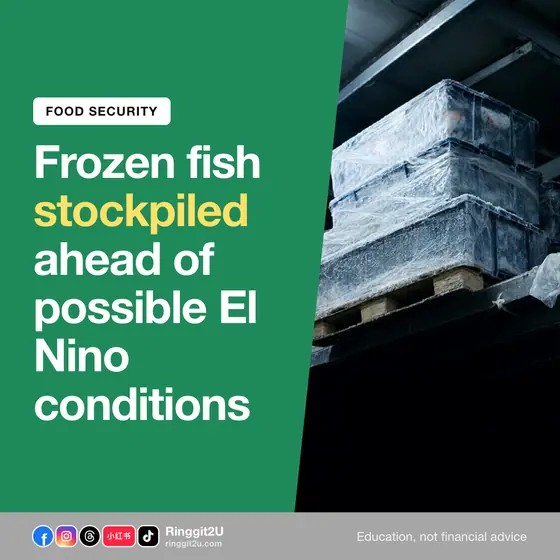
61% of Malaysians lack RM1,000 emergency savings, BNM report finds
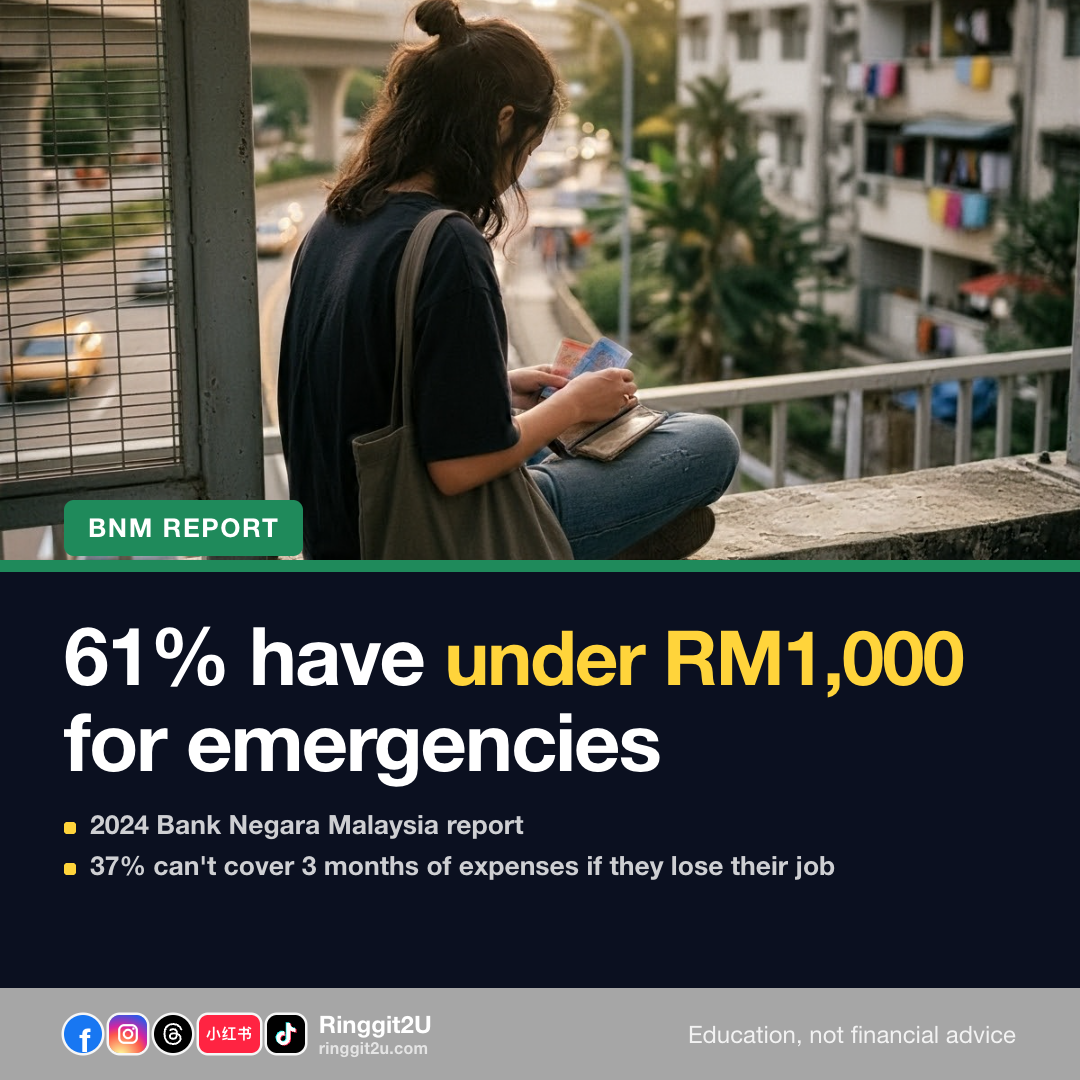
A BNM 2024 report found 61% of Malaysians have no RM1,000 emergency savings and 37% cannot cover three months of expenses.
What happened1/5 DPM Fadillah: 61% of Malaysians have no RM1,000 emergency fund
Deputy Prime Minister Datuk Seri Fadillah Yusof said 61 per cent of Malaysians do not have savings of at least RM1,000 for emergencies, citing a 2024 Bank Negara Malaysia report. He spoke at the launch of the Juh Kita Melabur, Anak Sarawak programme at the ASNB Kuching branch on Nov 22.
He added that 37 per cent of Malaysians also lack enough savings to cover three months of expenses if they lose their job. Fadillah called the figures a challenge and said financial literacy must continue to be enhanced.
The real numbers2/5 The two numbers that show how thin the buffer is
61%have no RM1,000 emergency savings37%cannot cover 3 months of expensesRM1,000threshold the 2024 BNM survey usedThe BNM 2024 report measures two things: whether a household can pull out RM1,000 in a sudden crisis, and whether it can survive three months with no income. Both thresholds are low by any standard.
The 61% figure means roughly 6 in 10 Malaysians sit below that RM1,000 line. e.g. a sudden car repair or a hospital bill could force a borrowing decision almost immediately.
The 37% figure is the harder one. It means over a third of the population cannot cover three months of expenses if income stops.
- 01/01
37% cannot cover 3 months of expenses The two numbers that show how thin the buffer is cannot cover 3 months of expenses
Why it matters3/5 What the officials said about closing the gap
Fadillah said these are challenges reflected in the facts and figures presented by Bank Negara Malaysia, and that financial literacy is very important and must continue to be enhanced. The remarks came at an ASNB event, not a BNM press conference.
ASNB chief executive officer Fadzihan Abbas Mohamed Ramlee said financial education should be instilled from a young age to nurture a generation that was more financially savvy. He pointed to early understanding of the value of money, the importance of saving and basic investment principles as the foundation for better adult decisions.
Fadzihan also noted that Sarawakians had shown genuine interest in earlier financial education programmes, calling it evidence of a real appetite to learn, save and invest in the state.
How it affects your wallet4/5 What the missing buffer costs an ordinary household
e.g. if your monthly outgoings are RM2,500, three months of expenses is about RM7,500. The 37% in the BNM survey could not cover that amount if their income stopped tomorrow.
e.g. a Grab rider whose motorbike needs a repair, a shop assistant whose child is hospitalised for a few days, a contract worker between projects: none of these are rare events. For 61% of the population, they are events that force a borrowing decision almost immediately.
The practical consequence is not just the debt itself. It is the interest, the late-payment penalties, the hit to a CCRIS or CTOS record, and the months or years of reduced take-home pay to clear the balance.
Worth knowing5/5 The event where the numbers were shared
Fadillah's remarks came at the launch of the Juh Kita Melabur, Anak Sarawak programme at ASNB Kuching. ASNB chief executive officer Fadzihan Abbas Mohamed Ramlee said financial education should start young and that Sarawakians had shown genuine interest in earlier programmes.
ASNB also introduced a Sarawak-specific campaign, Juh, Melabur Menang Mas, running from Nov 1 to Dec 31. Under its terms, every accumulated net investment of RM5,000 maintained until the campaign's close earns one automatic lucky-draw entry, subject to eligibility conditions for Sarawakian unit holders.
Questions people ask
Where did the 61% and 37% figures come from?
Both numbers come from a 2024 Bank Negara Malaysia report, quoted by DPM Fadillah Yusof at an ASNB event in Kuching on Nov 22. The report measured whether households could access RM1,000 in an emergency and whether they could cover three months of expenses without income.
Does the 61% include people with EPF savings?
The FACTS do not specify how the BNM survey treated EPF balances or whether any EPF account was counted as accessible emergency savings. For the exact methodology, check the 2024 BNM report directly on bnm.gov.my ↗.