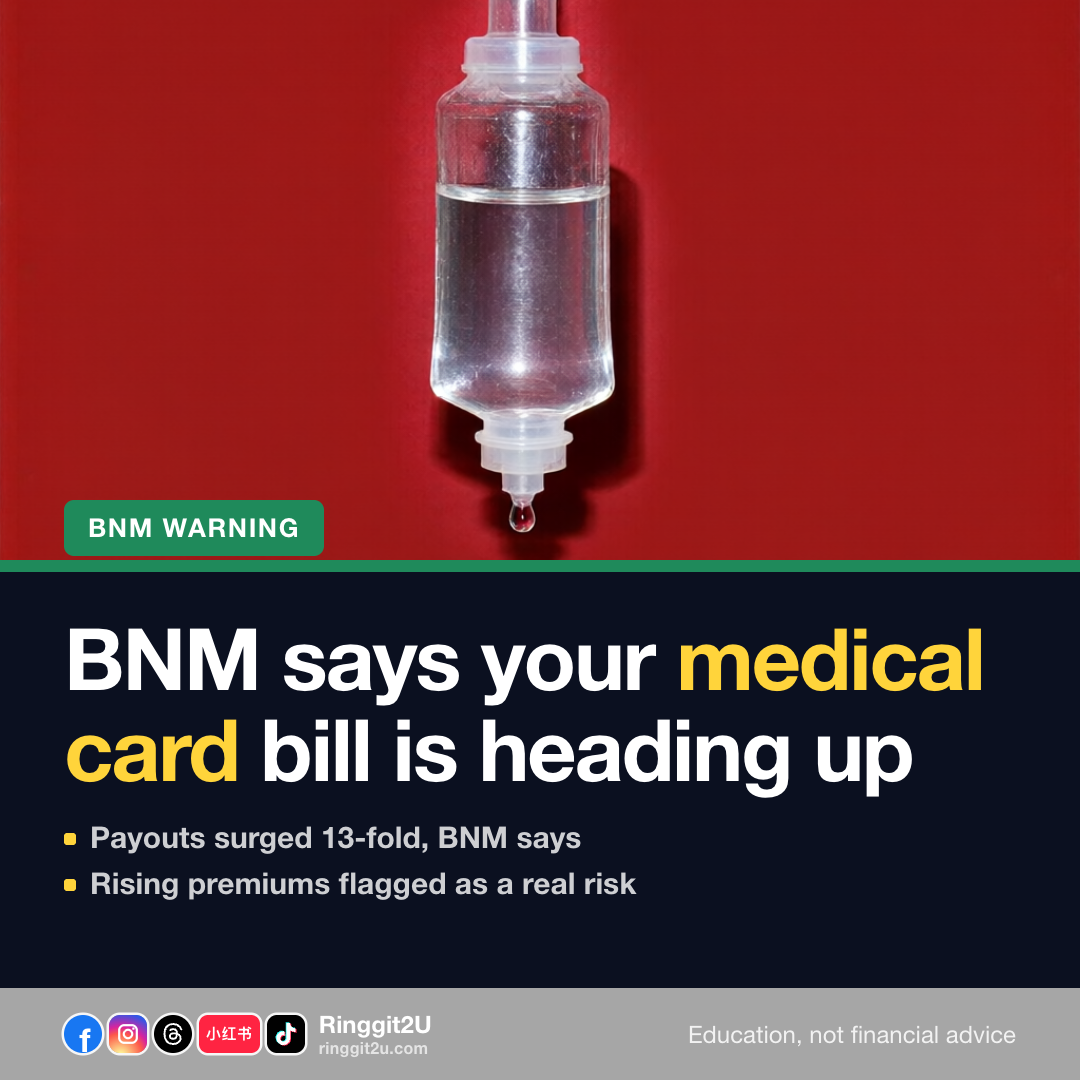
BNM flags medical payouts surging 13-fold as premiums climb
BNM says medical payouts have jumped 13-fold, warning of rising premiums and pressure on Malaysia's healthcare system.
What happened1/5 BNM raises the alarm on medical claims costs
On 22 November 2026, Bank Negara Malaysia flagged that medical insurance claims payouts have surged 13-fold, a pace the central bank warns is squeezing the whole healthcare system.
BNM flagged the trend in a warning reported by the Malay Mail. The regulator did not name specific insurers, break the figure down by product type, or give a dollar value for total payouts.
The warning covers the direction of medical costs across the sector, not a single company's results. BNM did not announce a new rule or a cap on premiums alongside the flag.
The real numbers2/5 The 13-fold figure and what BNM is watching
13-foldsurge in medical payouts flagged by BNM2.75%OPR held steady since Sep 2026 meetingThe 13-fold payout surge is the one hard number BNM put out. It describes how fast claims payouts have grown relative to an earlier baseline the regulator did not specify in the public statement.
BNM's last monetary-policy move was in September 2026, when it held the Overnight Policy Rate at 2.75% for the seventh straight meeting. A change in the OPR moves floating-rate loans such as most home loans through banks' base rates; fixed-rate loans like most hire-purchase car loans do not move. The medical-insurance warning is a separate regulatory concern, not a rate decision.
No specific premium-increase percentage, hospital-bill average, or insurer-by-insurer breakdown was published with the warning.
- 01/02
13-fold surge in medical payouts flagged by BNM The 13-fold figure and what BNM is watching surge in medical payouts flagged by BNM
How it affects your wallet3/5 How the payout surge lands on your medical cover
When claims payouts jump this fast, the money leaving insurers to pay hospital bills, specialist fees and drug costs grows much faster than the premiums coming in. The usual industry response is to raise premiums at renewal.
If you hold a personal medical card, your next renewal notice may carry a higher premium. If your cover comes through your employer's group plan, the group rate your company pays could go up, and some of that cost may eventually show up in your benefits.
BNM did not publish a specific percentage increase or a timeline for when premiums will adjust. The warning describes the pressure building, not a confirmed hike on any particular policy.
For example, if a policyholder currently pays RM200 a month for a medical card, a 10% renewal increase would push that to RM220. That is an illustration of how a percentage lands on a monthly premium, not a figure BNM announced.
- Check your renewal notice before signing anything
- Compare the new premium against what you paid last year
- Ask the insurer for a breakdown if the jump feels steep
Why it matters4/5 Why BNM steps in when medical costs spiral
BNM oversees the insurance and takaful industry. When it publicly flags a trend, it is signalling to insurers, takaful operators and the public that a system-wide risk is building.
A 13-fold payout surge means the cost of treating patients - hospital stays, surgery, oncology drugs, specialist consultations - is rising far faster than the premiums collected. Two things can happen next, and neither is comfortable.
If premiums do not rise enough to cover claims, insurers' reserves get thinner and the regulator worries about their ability to pay future claims. If premiums rise too fast, households drop their cover and more patients end up in public hospitals, adding to the pressure on the public healthcare system BNM warned about.
The warning targets both ends of that squeeze. It is not a directive to any single insurer and does not set a premium ceiling.
- 02/02
OPR held steady since Sep 2026 meeting 2.75% The 13-fold figure and what BNM is watching OPR held steady since Sep 2026 meeting
Worth knowing5/5 One thing to do this week
If you have a medical card or health insurance, open your latest policy document and note the current premium, the annual limit, the deductible and any room-and-board cap. When the renewal letter arrives, compare it line by line. If the premium jumps and the benefits shrink, that is the signal to ask questions before you auto-renew.
Questions people ask
Why are medical insurance premiums going up in Malaysia?
BNM flagged that medical claims payouts have surged 13-fold. When insurers pay out far more in claims than premiums collected, they raise premiums at renewal to stay solvent. The root cause is rising hospital bills, specialist fees and drug costs, not a single company's pricing decision.
Does BNM's warning mean my premium will definitely increase?
BNM did not announce a specific premium increase or a timeline. The warning describes the pressure building across the sector. Your actual renewal premium depends on your insurer, your age, your claims history and your plan's terms. Check your renewal notice when it arrives.
Is BNM's medical insurance warning related to the OPR decision?
No. The OPR was held at 2.75% in September 2026 and affects floating-rate loans like most home loans. The medical-insurance warning is a separate regulatory concern about claims costs and premiums. Both come from BNM but address different risks.
What should I do if my medical premium jumps at renewal?
Compare the new premium against last year's, check whether the annual limit, deductible and room-and-board cap changed, and ask the insurer for a written breakdown of the increase. If the terms worsen, compare other plans through a licensed agent or the insurer's website before deciding.
Source: Malay MailThe Star